The vault
The cellars of the Brito Freire Palace were built to store wine and horses — not for concerts. But the curved stone returns the voice whole to the room, without echo or loss. Natural acoustics that make microphones unnecessary.
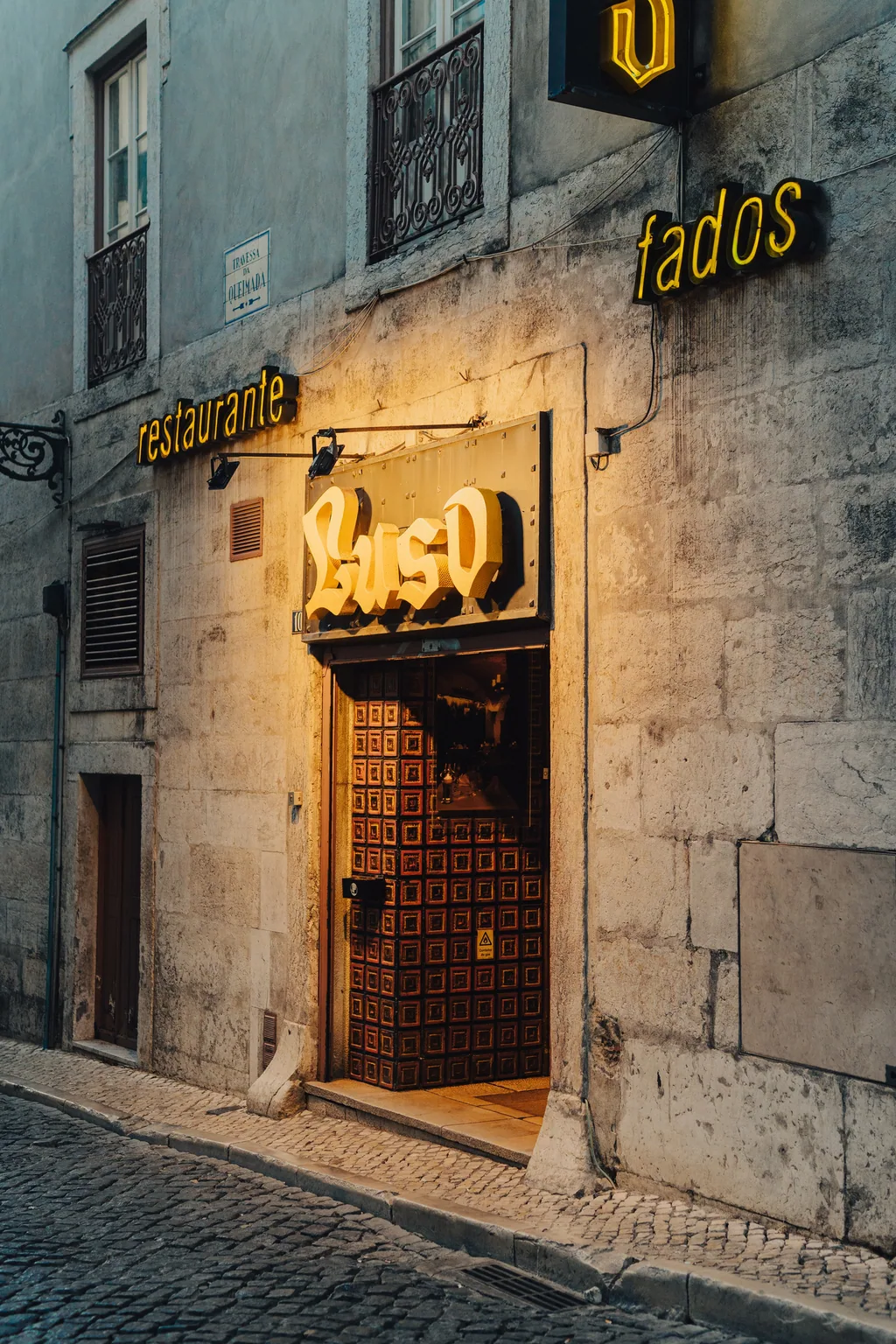
A fado house in Lisbon, since 1927
Café Luso occupies the old cellars and stables of the Brito Freire Palace, in the heart of Bairro Alto. The walls are the palace’s own: bare stone, arches, low vaults that hold sound like a closed hand.
Those acoustics are what turned this cellar into a fado house. There are no microphones and no amplification here — the voice fills the room because the room was built, unknowingly, to receive it.
The house opened in 1927 on Avenida da Liberdade, beside Parque Mayer. By 1932 the newspaper Guitarra de Portugal was already crediting it with “extraordinary fame”, and Alfredo Marceneiro, Berta Cardoso and Lucília do Carmo all sang there. In the summer of 1940 it gave its last fado session on the avenue; on 18 January 1941 it reopened in Bairro Alto, in the old cellars of the Brito Freire Palace — also known as the Palácio de São Roque — where it remains.
It was in this room that the house earned the name “Cathedral of Fado”, and here that Amália Rodrigues recorded, in 1955, the album No Café Luso. Generations of fado singers and guitarists have come and gone; the murals and the stone stayed. That continuity is what you feel coming down the stairs: you walk into a place where the night has been practised since 1927.
This is not a show with dinner served on the side — it is a whole evening with fado at its centre. The sets alternate with the courses; when someone rises to sing, the kitchen suspends service and the room falls silent.
Those who come to listen stay silent through each fado. That is the rule of the house — and it is the only one.
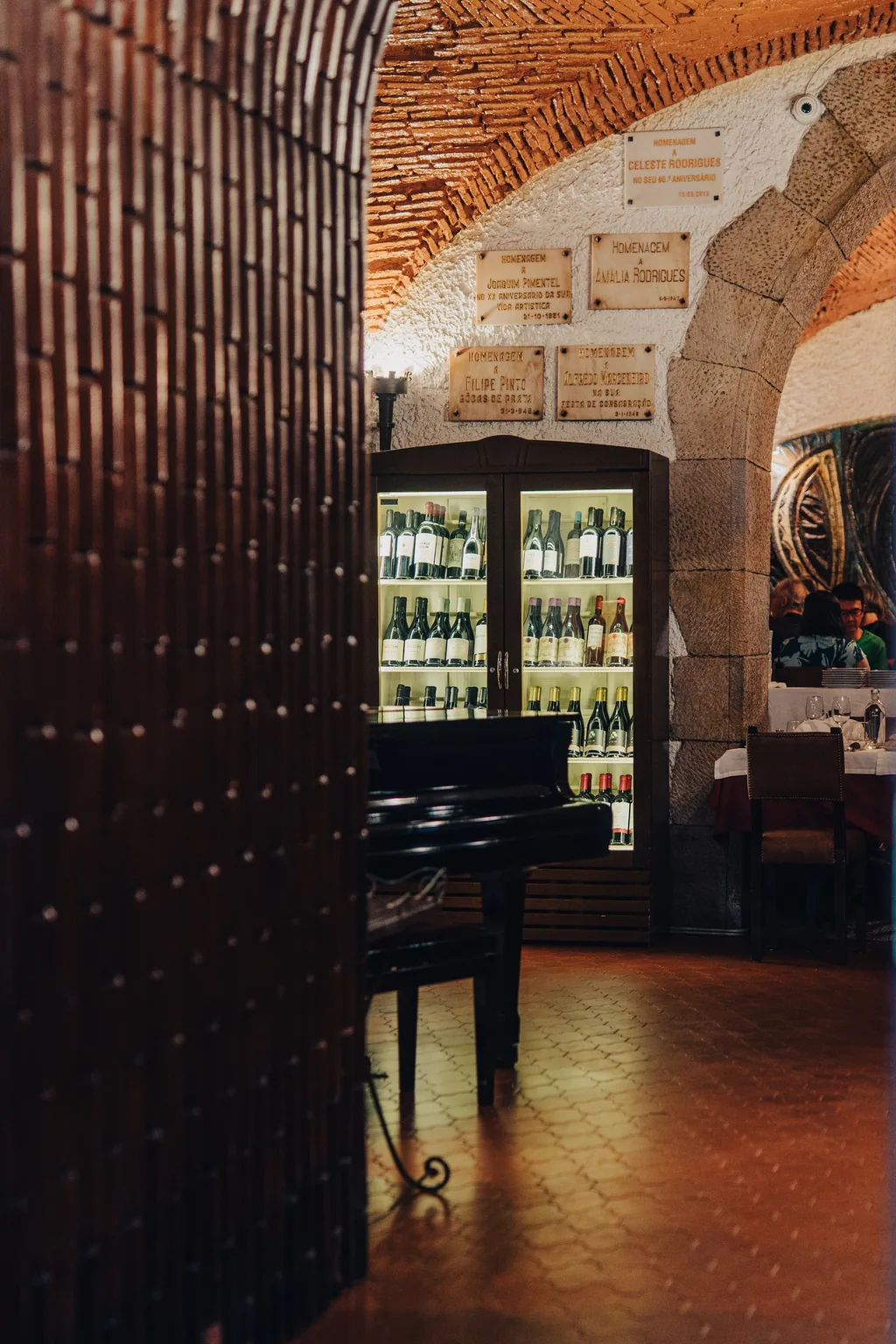
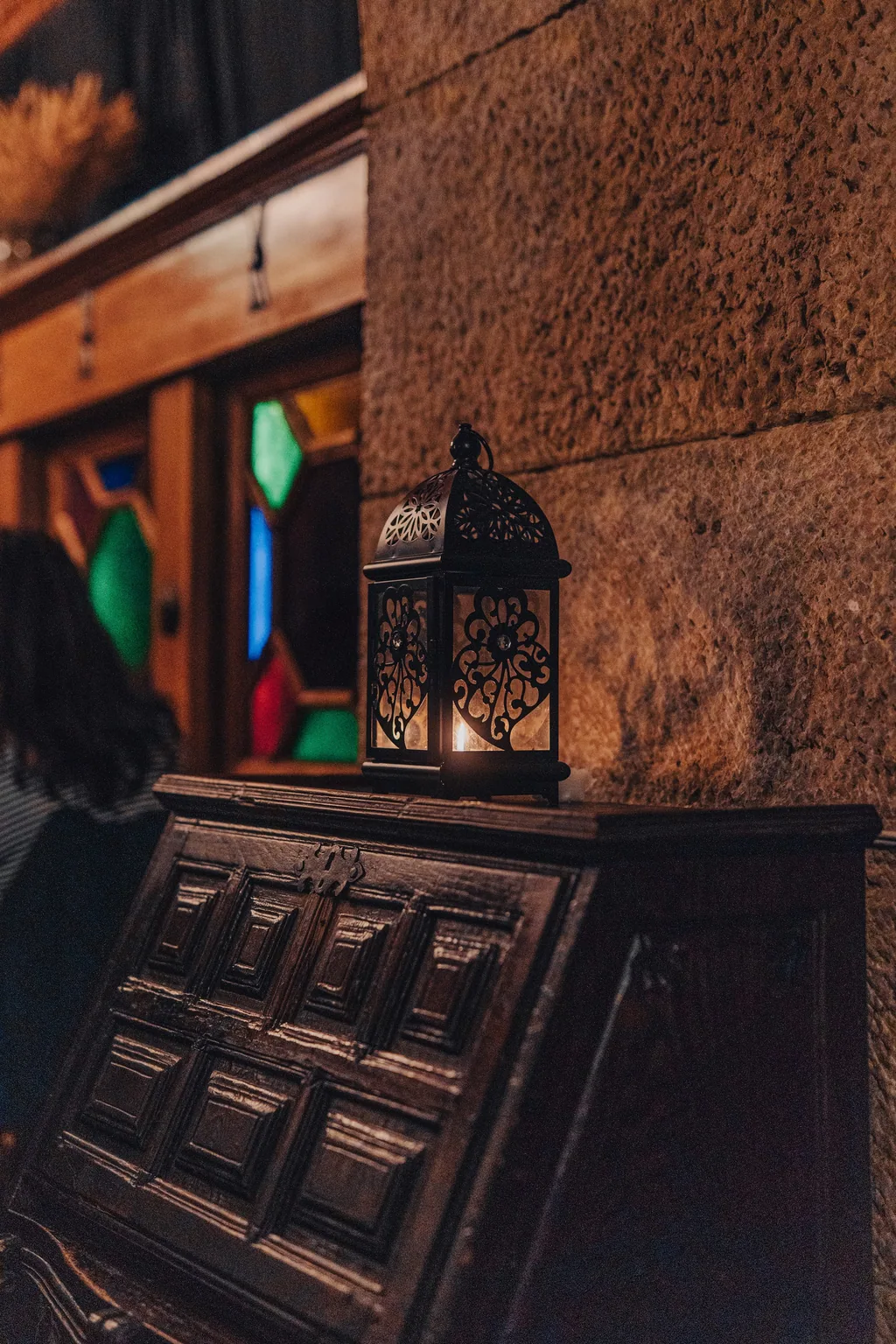
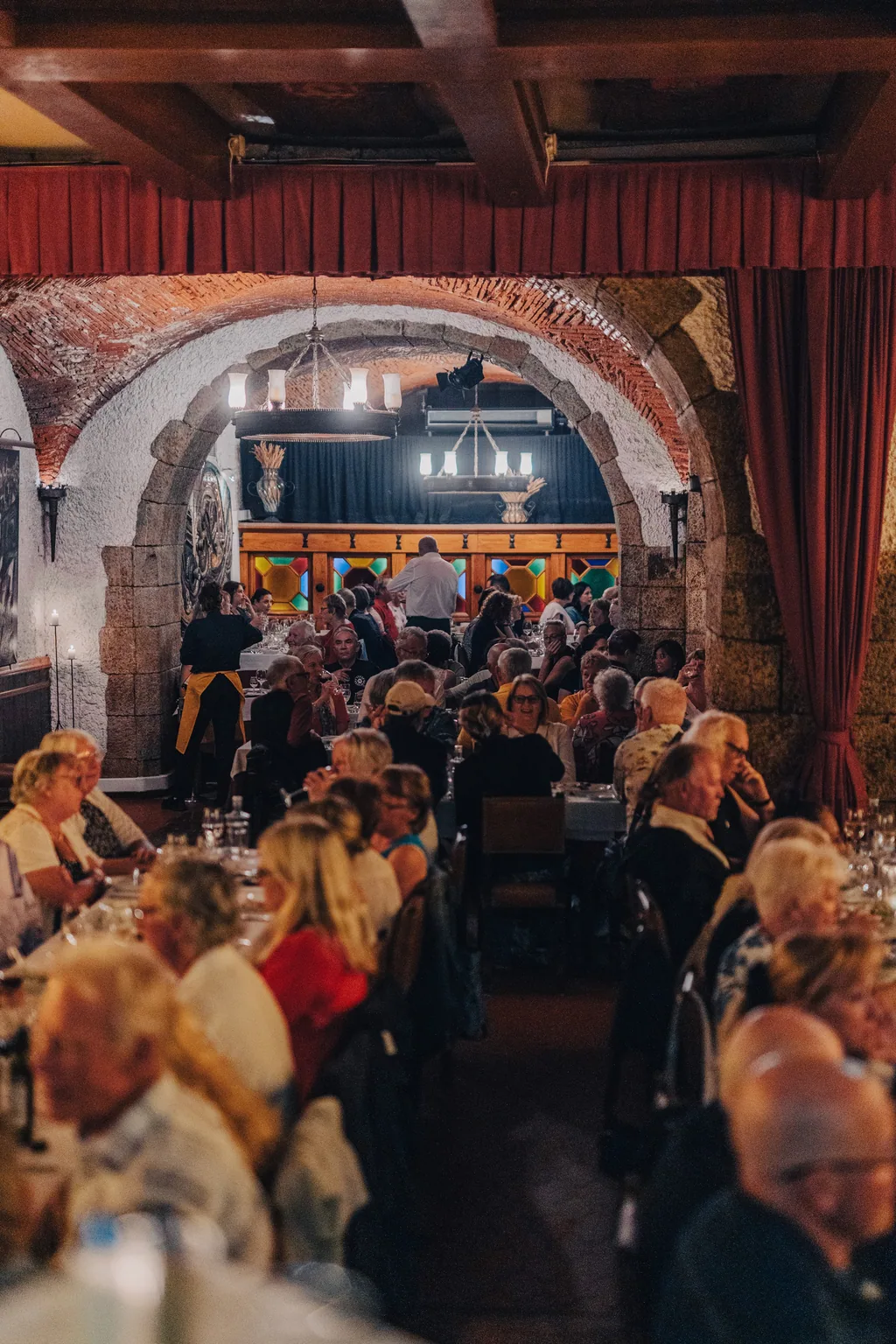
These vaults were wine cellars.Travessa da Queimada 10, since 1927
They kept wine.
Since 1927 they have kept voices.
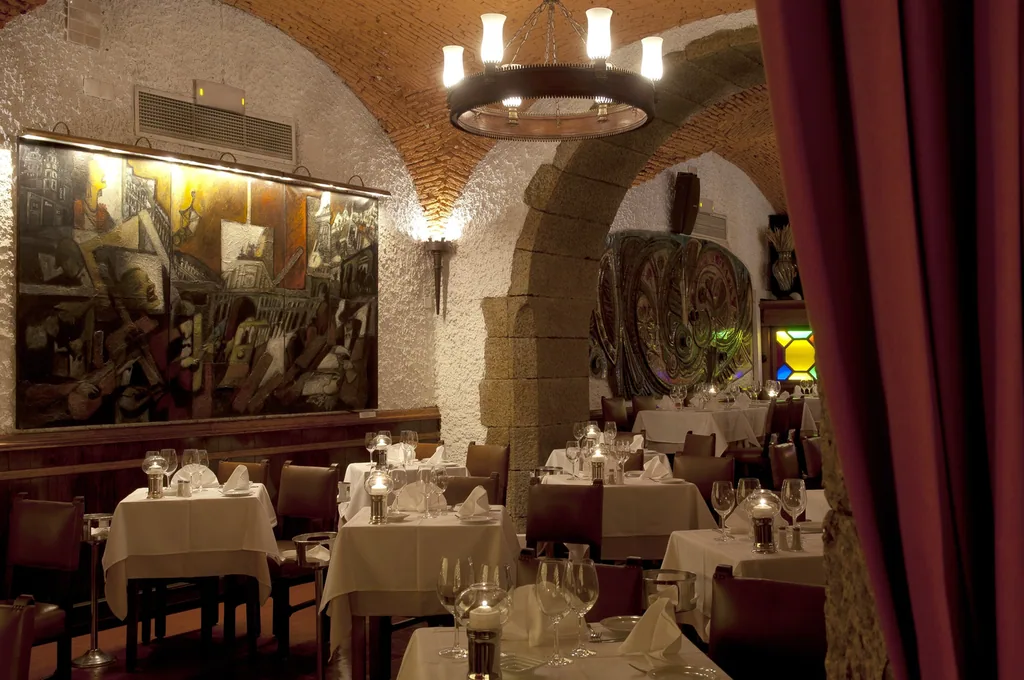
Three things cross time in this house: the vault that gives the acoustics, the murals that hold the memory, and the stage among the tables where fado is sung.
The cellars of the Brito Freire Palace were built to store wine and horses — not for concerts. But the curved stone returns the voice whole to the room, without echo or loss. Natural acoustics that make microphones unnecessary.
The dining-room walls carry murals portraying fado and its figures. For generations, fado singers have performed in front of them — the painted and the living on the same wall.
There is no raised stage and no pit between singer and listener. Fado happens among the tables, a few steps from those dining — as in the fado houses of old.
Fado begins at 20:15. The kitchen opens at 19:00. The tables beneath the vault are few — and evenings fill up well in advance.